

Instead of collecting menu choices, arrival times and kitchen questions in separate messages, set up one shared dinner brief before you book a private chef for a vacation rental group dinner. In 2026, the order is simple: confirm the home's rules, agree on the guest count, then give the chef one written plan.
- For a private chef for a vacation rental group dinner, confirm host approval before committing to a chef.
- Lynxresort offers private vacation homes for up to 16 guests; chef service is a separate arrangement.
- Send the chef one brief covering guest count, dietary needs, kitchen access and the dinner schedule.
- Choose on-site cooking for a hosted meal; choose delivered catering when kitchen access is limited.
Why this matters
A chef can plan the food, but the trip organizer still has to connect three separate plans: what the host permits, what the chef needs and when the group will be ready to eat. If those answers live in different message threads, the gaps tend to surface when everyone is arriving.
Lynxresort vacation homes are a fit for groups of up to 16 guests planning to stay together; a private chef booking needs its own host approval and service plan. The Lynxresort homes are in West Palm Beach and Miami and can be booked directly. Do not treat a home's sleeping capacity as permission to add dinner guests or outside vendors.
For a 2026 group trip, name one dinner coordinator. That person collects answers from the host and chef, then sends the group a final schedule. A shared document works better than asking every guest to negotiate separately with the chef.
Before you start
- Confirm access and permission. Have the vacation rental booking details and a way to contact the host. Ask whether an outside chef may enter, cook and serve at the home. Confirm any limits on visitors, parking, access times, noise and cleanup before making a commitment to the chef.
- Gather the meal brief. Record the number of diners, dietary requirements, children needing different meals, the occasion and a preferred serving time. Ask every guest about allergies directly rather than inferring them from a group chat.
- Check the kitchen handoff. Ask the host what kitchen equipment and serving space are available, then ask the chef what they will bring. The gotcha: a vacation home that sleeps your group does not necessarily have enough pans, plates or work space for the menu you have in mind. Confirm the setup before agreeing to that menu.
Keep host approval separate from chef availability. A chef saying they can travel to the address does not establish that the rental permits the service. Likewise, host approval does not mean a particular chef is available for your 2026 stay.
Confirm house rules
Use Host approval as the first field in your own planning brief. These are labels for your shared document, not buttons on a booking site.
- Send the host the plan. State the dinner date, expected number of diners, whether every diner is an overnight guest, and whether the chef will cook on-site or bring prepared food. Ask about any visitor or vendor rules that apply.
- Record the answer under Host approval. Keep the host's written response with the trip details. If the host sets conditions, copy them into the brief without paraphrasing.
- Confirm the spaces under Kitchen and access. Ask about the cooking area, dining setup, parking and the route the chef should use to enter. Record what you know and mark unanswered items for a follow-up.
Expected result: you can tell a prospective chef what is permitted and what still needs confirmation. Do not turn a conditional answer from the host into a firm promise to the chef.
For a Lynxresort vacation home dinner, make the request specific to the booked home. The two homes are in different cities, and neither a general description of the brand nor an overnight capacity answers the house-rule questions for your dinner.
Brief the chef
Create a single Chef brief that you can send to each chef you contact. It keeps the questions consistent without assuming any chef uses a particular app or intake form.
- Fill in Guest count. Separate overnight guests from any proposed visitors. If visitors have not been approved by the host, mark them as unconfirmed rather than including them in the final count.
- Fill in Dietary needs. List allergies, restrictions and child-specific requirements by guest. Ask the chef how they handle those needs and what information they require before finalizing the menu.
- Fill in Service format. Say whether you want the chef to cook and serve at the home, prepare food elsewhere and deliver it, or discuss both approaches. Ask who handles shopping, serving equipment and post-meal cleanup; do not assume these are included.
- Fill in Kitchen and access. Share only the equipment and access details the host has confirmed. Ask what the chef needs to bring and whether they need time in the kitchen before guests sit down.
- Ask for a written service outline. Request the proposed menu, arrival and serving plan, responsibilities, cancellation terms and any outstanding decisions. Keep this outline with the host's response.
Expected result: each chef is responding to the same dinner brief, and you can identify a mismatch before anyone starts planning food around the wrong kitchen or guest count.
On-site chef or delivered catering?
Both can put dinner on the table, but they place different demands on the home. Choose the format the host permits and the group can actually support.
| Option | Best for | Advantage | Limitation to resolve |
|---|---|---|---|
| On-site private chef | A group that wants cooking and service at the rental | The chef can coordinate courses around the agreed dinner time | Requires confirmed kitchen access, workspace and host permission |
| Delivered catering | A group that wants food brought to the rental without on-site cooking | Reduces the need for cooking access | Serving, holding food and cleanup still need assigned owners |
Neither option removes the need to confirm visitor rules. If you are comparing dates for a 2026 dinner, ask prospective chefs what information they need before they can hold a date; the private-chef booking notice guide covers that planning question in more detail.
Set the dinner plan
A menu is not a schedule. Build a timeline from the group's actual travel plans and the chef's stated preparation needs, then send the same version to the host, chef and guests where relevant.
- Set Guest arrival. Record when overnight guests expect to reach the home. If people are arriving separately, identify who will be present to admit the chef and answer questions.
- Set Chef access. Agree on the chef's arrival window with both host and chef. Confirm how entry will work without sharing access details more widely than necessary.
- Set Dinner service. Agree on when guests should be ready to eat, not just when the chef should arrive. Add any welcome gathering or speeches the chef needs to work around.
- Set Cleanup handoff. Write down who clears dishes, handles leftovers and leaves the kitchen in the condition the host requires. Ask the chef which tasks are part of their service.
Expected result: the plan identifies a person and a time for every handoff. If the chef is waiting for a guest with the entry information, the schedule is not finished.
A workable sample timeline might reserve 1 hour between the group's planned arrival and dinner preparation, with 2 hours for a meal and conversation. Those are planning placeholders, not requirements or promises about chef preparation time. Replace them with the chef's actual needs and the group's travel details before sending the final 2026 schedule.
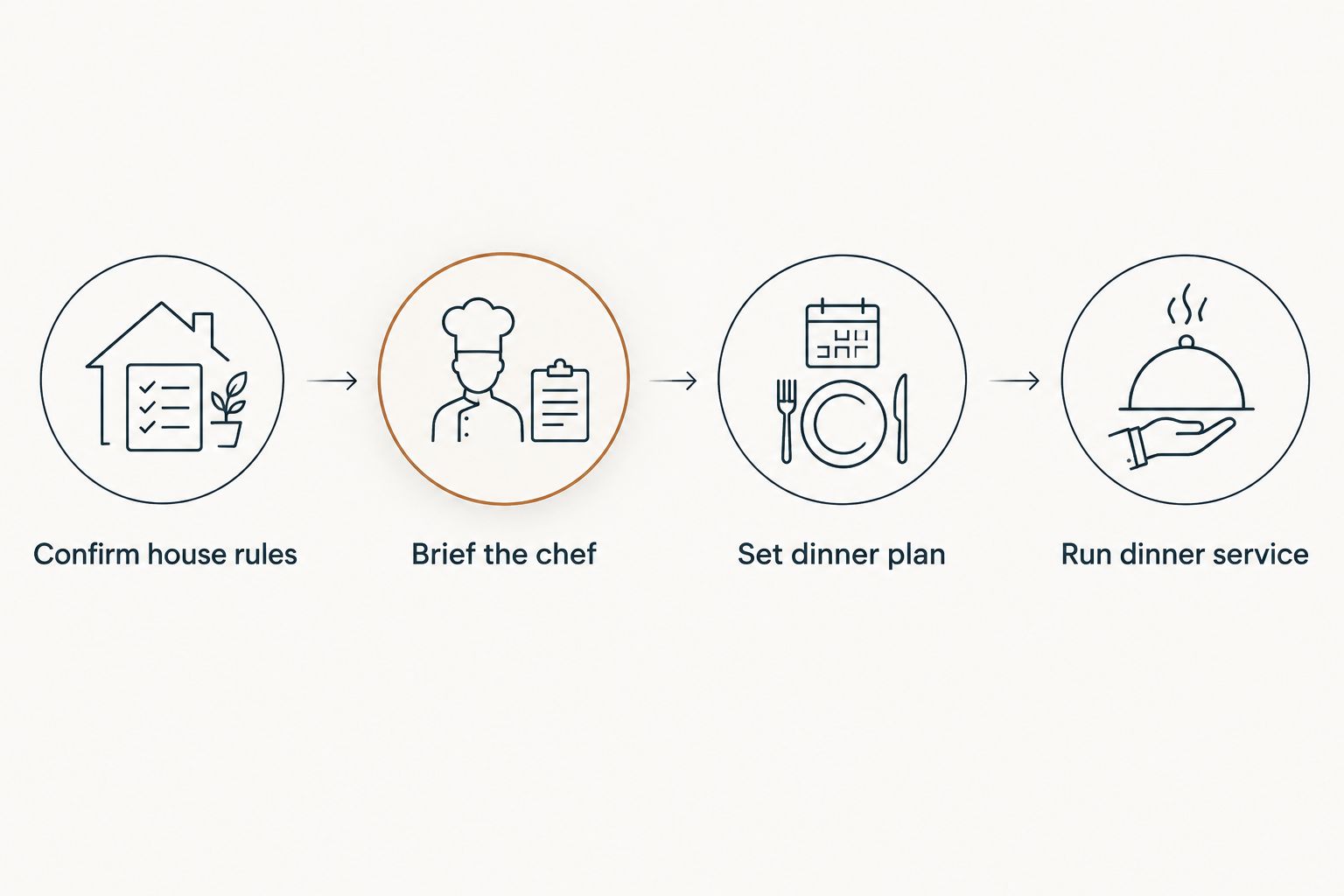
The sequence is easier to check when every handoff is visible:
Run dinner service
The dinner coordinator should have the final brief open when the chef arrives. Other guests can settle in without becoming a second source of instructions.
- Confirm the handoff. Check that the chef has entered through the agreed route and can reach the kitchen and dining area described in the brief.
- Check the guest list. Tell the chef about any attendance or dietary change immediately. Do not assume a late change can be accommodated; ask what remains workable.
- Keep one point of contact. Have the coordinator handle timing questions and any host communication. Guests should not issue conflicting instructions about the menu or service.
- Close the loop. At the end of service, check the agreed cleanup responsibilities and resolve any remaining kitchen questions before the chef leaves.
Expected result: the meal runs to one agreed plan, and the coordinator can identify who owns any task left unfinished. A quiet handoff at the end matters as much as an orderly start.
Plan your group stay
Explore direct booking for private homes in West Palm Beach and Miami.
Variant: plan dinner after a staggered arrival
A fixed dinner time is harder to manage when guests reach the rental on different flights or drives. Use the same host approval and chef brief, but change the schedule around a named arrival coordinator rather than the first guest through the door.
- Identify the access lead. Choose the person who will be at the home in time to meet the chef. Confirm that person's arrival before agreeing to the chef's access window.
- Separate arrival from service. Ask the chef for a serving plan based on when the group expects to be seated, not the earliest guest's check-in. Share any speeches or activities that affect the meal.
- Set a change deadline with the chef. Ask when attendance, dietary and timing changes need to be communicated. Record the chef's answer in the brief instead of imposing a deadline yourself.
- Send one final update. The coordinator tells the chef who is delayed and whether the agreed service time still works. The host receives an update if the access or visitor plan changes.
Expected result: a delayed guest does not become an unannounced change to kitchen access or dinner service. In 2026, keep the agreed version of the schedule with the booking details so another guest can step in if the coordinator is delayed.
Troubleshooting
- The chef asks for equipment you cannot confirm. Ask the host what is actually at the home, then ask the chef for a menu or service approach that fits that answer. Do not promise equipment based on a photograph or a previous rental stay.
- The dinner includes people who are not staying overnight. Pause the headcount and ask the host whether those visitors are permitted. Sleeping capacity is not an event or visitor policy.
- A guest reports an allergy after the menu is agreed. Send the information directly to the chef and request an explicit response about what can be prepared. Do not edit the menu yourself or assume removing one ingredient resolves cross-contact concerns.
- The chef's arrival overlaps with the group's check-in. Name an access lead and confirm the host's entry instructions before the chef travels. If no one can receive the chef, revise the access window with the chef.
- Cleanup responsibilities are unclear. Refer to the written service outline and host conditions. Agree on who handles dishes, food storage and the kitchen handoff before service begins, not after guests leave the table.
Customize your workflow
For a family reunion, collect dietary information from each household and ask who is bringing children to dinner. For a retreat, give the chef the agenda segment that immediately precedes the meal. For a celebration, flag speeches or activities that would interrupt service. These details change the brief; they do not replace host approval.
If you are staying at a Lynxresort vacation home, keep the dinner plan tied to the specific West Palm Beach or Miami booking. Ask about the home's rules rather than relying on what another group arranged elsewhere. That distinction is especially useful when a 2026 trip combines overnight guests with local friends or relatives.
Once the dinner is settled, send the group a short final note: who is dining, when to be ready, what dietary information has been passed to the chef, and who to contact if plans change. Leave chef access details between the people who need them. One clear note prevents the group chat from becoming a second, conflicting dinner plan.
FAQ
How do you book a private chef for a vacation rental group dinner?
Confirm the host permits an outside chef, then send chefs a brief with the guest count, dietary needs, kitchen details and dinner time. Agree on service and cleanup responsibilities in writing before the meal.
Can a private chef cook at any vacation rental?
No; permission depends on the rental's rules and the specific plan. Ask the host about outside vendors, visitors, access and kitchen use before confirming service.
Does a vacation home that sleeps 16 allow 16 dinner guests?
Sleeping capacity alone does not establish a dinner or visitor policy. Confirm the number of permitted diners with the host, especially if anyone is not staying overnight.
What should I tell a chef before planning the menu?
Share the confirmed diner count, dietary needs, service time and kitchen information. Tell the chef which equipment or access details still need the host's confirmation.
Is an on-site chef better than delivered catering for a group dinner?
An on-site chef suits a group that wants cooking and service at the home and has permission and kitchen access. Delivered catering reduces on-site cooking needs, but someone still needs to manage serving and cleanup.
Who coordinates the chef on dinner day?
Name one dinner coordinator to handle access, timing changes and host communication. A single point of contact prevents conflicting instructions from guests.
What if guests arrive late for a private-chef dinner?
Tell the chef promptly and ask whether the agreed service time still works. Set an access lead and discuss schedule changes with the chef rather than assuming the meal can move.
One last thing
Get the host's answer before shaping the menu around the kitchen. A private chef for a vacation rental group dinner is a coordination task first and a food choice second. For a 2026 stay, that one ordering decision keeps the chef brief grounded in the home you have actually booked.