
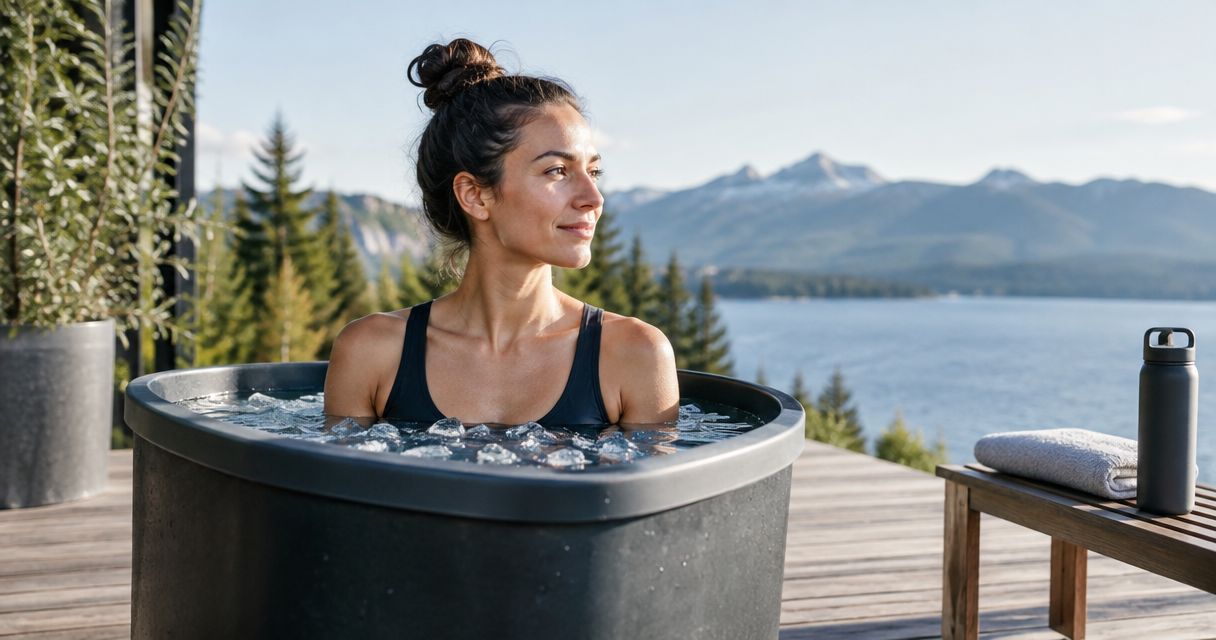
Cold plunging can be safe for some beginners, but it is not risk-free. Sudden immersion can trigger an involuntary gasp, rapid breathing and a rise in heart rate and blood pressure; start with a brief, supervised exposure you can end immediately, and ask a clinician first if you have a heart condition or another relevant health concern.
- Is cold plunge safe for beginners? For some, yes, but sudden immersion creates an immediate breathing and circulation risk.
- Enter gradually, keep your head above water, and have someone nearby who can help you get out.
- Skip immersion and seek medical advice first if you have a heart condition, fainting history or concerning symptoms.
- For a group retreat, a private vacation home is a setting, not a substitute for medical supervision.
Why this matters
The first challenge is not how long you can tolerate the cold. It is whether you can control your breathing and leave the water safely when the cold hits. A beginner's first plunge should be easy to stop, not hard to endure.
Planning a wellness trip in 2026 adds another layer: friends can encourage each other, but a group can also make someone feel obliged to stay in. Set the rule before anyone enters. Anyone can decline or get out without explaining why.
For hosts and retreat planners, the Lynxresort vacation homes are private group accommodation in West Palm Beach and Miami, with each home sleeping up to 16 guests. That describes the lodging, not the safety or availability of a cold plunge. Check the specific home's current amenities and arrange appropriate supervision separately.
Is cold plunge safe for beginners?
Cold plunging is safer for a beginner who can enter gradually, keep their head above water and exit at once. It is a poor first activity for someone who feels faint, has symptoms of illness or is uncertain whether a medical condition changes their risk. Do not use another person's tolerance as your target.
| Choice | Best for | Advantage | Limitation |
|---|---|---|---|
| Gradual entry with another adult present | A beginner who has no known reason to avoid cold immersion | You can assess your breathing and leave immediately | A companion cannot eliminate the cold-shock response |
| A cool shower instead of immersion | Someone who wants a lower-commitment first experience | You can stop the water without climbing out of a tub | It does not establish that full immersion is safe for you |
| Skip immersion and ask a clinician | Someone with a heart condition, fainting history or another health concern | You avoid testing an uncertain risk in the water | You need individual advice before deciding whether to try it |
How to approach a first session
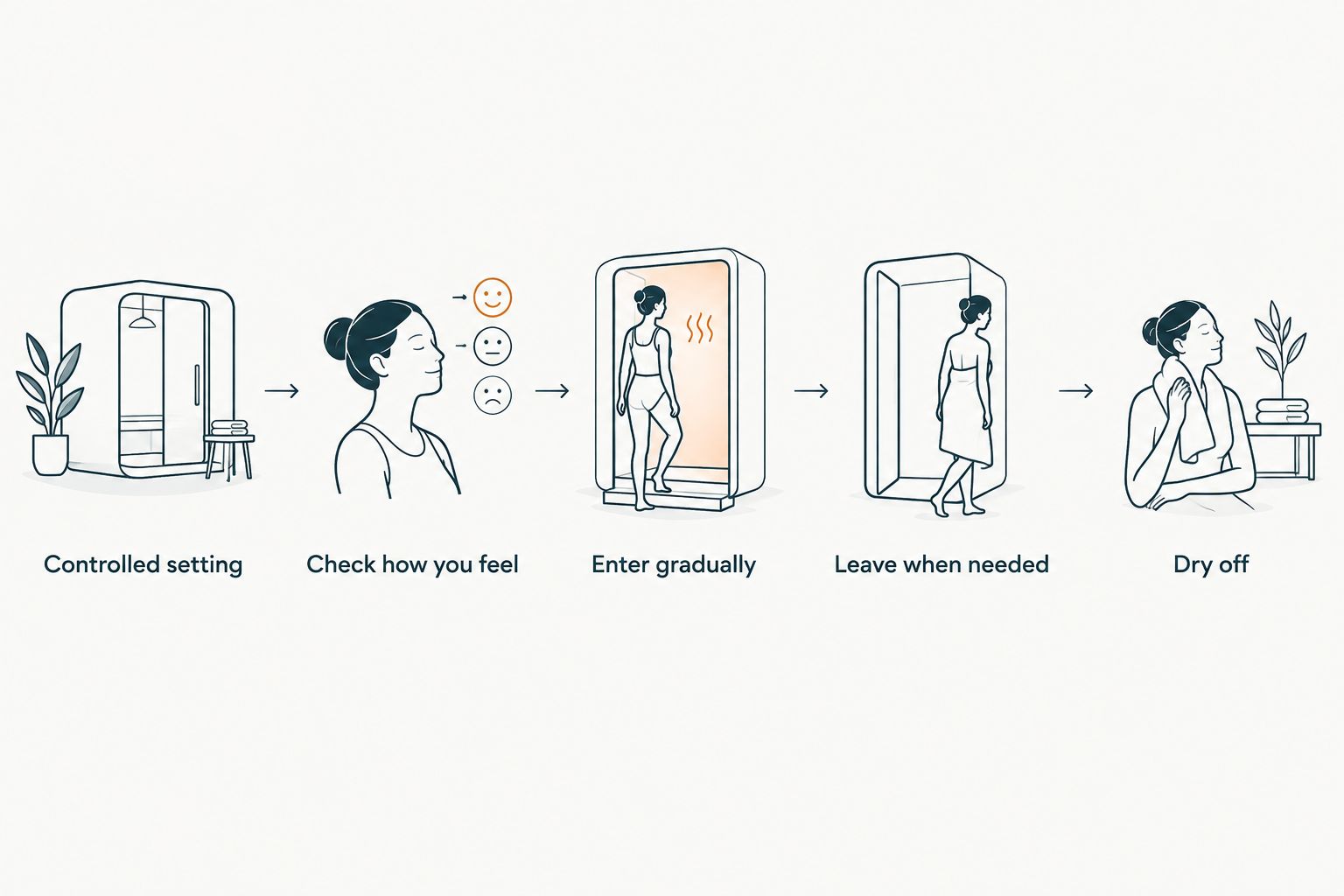
- Choose a controlled setting. You need a stable way in and out, a clear exit path and another adult close enough to respond. Do not make your first attempt alone in open water.
- Check how you feel before entering. If you feel unwell, dizzy or short of breath, do not get in. If you have a relevant medical concern, seek individual advice before the session.
- Enter gradually and keep your head above water. Do not jump in, put your face under or hold your breath. Focus on whether you can breathe steadily rather than on staying in.
- Leave when your breathing or coordination is not under control. Also leave if you develop chest discomfort, marked dizziness or unusual weakness. Do not wait for someone else to end the session.
- Dry off, get warm and reassess. If symptoms persist, seek medical help. Chest pain, severe breathing difficulty, confusion or collapse call for urgent medical care.
There is no useful first-session goal that requires you to override warning signs. In 2026, treat a posted challenge or a friend's routine as their choice, not a safety standard for your body.
Who should get medical advice before a cold plunge?
Ask a clinician before cold-water immersion if you have a diagnosed heart or circulation condition, an irregular heartbeat, high blood pressure, a history of fainting or a condition that affects breathing. Pregnancy, seizure disorders, reduced sensation and medicines that affect your response to cold also warrant individual advice. A group host cannot assess these risks for you.
Lynxresort is best for a private South Florida group stay, not for deciding who is medically cleared to plunge. Its two homes give a group one place to stay; they do not replace a clinician or trained supervisor. If cold-water immersion is central to your retreat, confirm the facilities at the home you are considering before you build an itinerary around them.
Do not assume that being young, athletic or comfortable in a swimming pool settles the question. The immediate reaction to cold water is different from ordinary swimming. If you have previously felt faint around heat, cold or exertion, raise that history when seeking advice rather than testing it during a group activity.
Why cold-plunge risk varies
The answer to whether a cold plunge is safe for beginners depends on the person and the setting, not on a single universal session length. These factors change what happens when someone enters and how quickly they can respond:
- Health history: Heart, circulation, breathing and fainting concerns change the decision to enter at all. Individual medical advice takes priority over a retreat schedule.
- How abruptly you enter: Sudden immersion is more likely to catch you with an uncontrolled gasp or rapid breathing. Gradual entry gives you a chance to stop.
- Whether your airway stays clear: Submerging your face or head while your breathing is unsettled adds a drowning risk. Keep your head above water.
- Exit conditions: A slippery edge, awkward step or remote location makes it harder to leave when you need to. Check the route out before entering.
- Supervision and group pressure: Someone nearby can notice trouble and help, but encouragement to remain in longer can work against a safe exit. Agree that leaving is always acceptable.
- How you feel that day: Illness, dizziness or unusual fatigue is a reason to skip the session. Your prior experience does not cancel a warning sign today.
A beginner in a controlled tub and a beginner stepping into open water face different exit problems, even if both call the activity a cold plunge. Treat the setting as part of the safety decision. For a 2026 retreat, write the exit rule into the plan before anyone suggests a challenge.
Is a cool shower better than a plunge for a first try?
A cool shower is the more controllable starting choice: you can turn it off immediately and do not need to climb out while cold. It is still cold exposure, so stop if you feel faint or struggle to breathe. Comfort in a shower does not prove that full-body immersion will feel the same.
A plunge places more of your body in cold water at once and makes entry and exit part of the task. Choose the cool shower if your goal is to learn how you respond, not to complete a group ritual. If you have a medical concern, changing the format is not a substitute for advice from a clinician.
For groups, offering a choice avoids dividing the trip into people who plunge and people who sit out. Someone can join the conversation, take a cool shower separately or skip cold exposure entirely. None of those choices requires an explanation to the rest of the group.
What should a retreat planner check before offering cold plunges?
Start with the location, not the itinerary. Confirm that the specific property or provider actually has a cold-plunge facility, how guests enter and leave it, and who is responsible for its care. A listing about wellness travel is not proof that a particular amenity is present or operating during your stay.
Then set a participation rule everyone hears: immersion is optional; no one goes in alone; no one holds their breath underwater; anyone can leave immediately. Ask participants to handle personal medical questions with their own clinician rather than disclosing health details to the whole group. Keep the schedule flexible enough that opting out does not mean missing the trip.
If you are comparing accommodation, separate where your group stays from where cold-water activity happens. The South Florida cold-plunge rental guide is a starting point for that comparison, but confirm current amenities directly before making plans. A private home gives a group shared space; it does not automatically supply a supervised wellness program.
For groups using a hot tub as well, treat that as a separate safety decision. Heat, cold and repeated transitions are not a beginner requirement. If a participant becomes dizzy at any stage, end their session rather than moving them to the next activity.
Can you cold plunge alone the first time?
No. A first cold plunge should have another adult nearby and a way to leave without depending on willpower or an audience. Cold shock can disrupt breathing immediately, and dizziness or poor coordination can make an otherwise simple exit difficult.
A companion's role is practical: keep the exit clear, pay attention and act if someone has trouble. They are not there to count down a challenge or persuade you to stay in. In 2026, the sensible first-session rule is simple: if your breathing is not under control, get out.
Open water adds risks that a controlled setting does not remove by itself: conditions change, footing is uncertain and help can be farther away. Do not treat an unsupervised lake or ocean dip as the equivalent of stepping into a tub with a clear exit.
How long should a beginner stay in cold water?
There is no duration in this guide that makes a first plunge safe for everyone. End the session as soon as you cannot breathe steadily, feel dizzy or have chest discomfort; you do not need to meet a timer. Individual health and water conditions matter more than someone else's routine.
If you are planning a group activity, avoid putting a shared duration on the itinerary. A fixed target can turn a safety decision into a test of endurance. Let each person decide whether to enter at all, and make leaving easy at every point.
The same rule applies after a comfortable previous session. Do not assume the next entry will feel identical, especially if you are tired or unwell. Stop based on how you respond that day.
FAQ
Is cold plunge safe for beginners with no known health problems?
Cold plunging can be safe for some beginners, but sudden immersion still carries breathing and circulation risks. Enter gradually, keep your head above water and have another adult nearby.
Should I hold my breath before getting into a cold plunge?
No. Do not hold your breath or submerge your face when you enter cold water. Cold shock can make breathing hard to control, so keep your airway clear and leave if you cannot breathe steadily.
Can I cold plunge if I have a heart condition?
Ask your clinician before trying cold-water immersion if you have a heart condition. Cold exposure can raise heart rate and blood pressure abruptly, and your individual risk needs medical assessment.
Is a cold shower the same as a cold plunge?
No. A shower can be stopped without climbing out of water, while immersion changes the entry and exit risks. Feeling comfortable in a cool shower does not establish that a plunge is safe for you.
What should I do if I feel dizzy during a cold plunge?
Get out immediately with help if needed, then dry off and get warm. Seek medical help if symptoms persist; collapse, chest pain or severe breathing difficulty calls for urgent care.
Should beginners put their heads underwater during a cold plunge?
No. Keep your head above water during a first cold plunge. An involuntary gasp or rapid breathing becomes more dangerous when your airway is submerged.
Can a vacation rental host tell me whether cold plunging is safe for me?
No. A vacation rental host can confirm property amenities, but only an appropriate clinician can advise you about your personal medical risk. Confirm facilities separately from any health decision.
One last thing
The safest group rule is also the easiest to forget: nobody has to participate. Lynxresort accommodates groups of up to 16 guests per home, so a shared retreat can include people who want cold exposure and people who do not. Keep the trip about time together, not a test everyone must pass.
If you are planning a wellness stay in 2026, confirm the exact facilities before promising an activity to the group. Then leave room in the schedule for people to change their minds on the day.