Yes, a wellness retreat house rental is worth it in 2026 when your group wants shared time, a flexible schedule and one place to stay together. It is less suited to guests who want a staffed program or separate private rooms. The decision turns on sleeping arrangements, house rules and who will organize the retreat.
- A wellness retreat house rental is worth it for groups that want shared time and can plan their own schedule.
- Lynxresort suits wellness-focused groups of up to 16 guests seeking a private South Florida home booked directly with the host.
- A house gives the group a shared base; it does not replace a staffed retreat program.
- Check beds, bathrooms, gathering space and house rules before booking a group stay.
Is a wellness retreat house rental worth it in 2026?
Yes, if being together is the point of the trip. A house lets you build the day around your group rather than around a venue's program. That freedom comes with work: someone must coordinate meals, activities, quiet time and the needs of guests who do not want to do everything together.
Lynxresort offers private vacation homes in West Palm Beach and Miami for groups of up to 16 guests. That stated capacity is a starting point, not a sleeping plan. Ask how the beds are arranged and where everyone will spend time before deciding whether either home fits your retreat.
| Stay type | Best for | What works | What to check |
|---|---|---|---|
| Private retreat house | A group that wants a shared schedule | One place to gather and room to set your own pace | Bed assignments, gathering space, rules and who plans the day |
| Staffed retreat venue | Guests who want an organized program | Activities and logistics can be part of the stay | Whether the program leaves enough unstructured group time |
| Separate accommodations | Guests who prioritize their own rooms | More separation between group activities | Where everyone meets and how they get there |
These are different ways to spend a trip, not interchangeable versions of the same experience. If your group wants to cook together, talk late into the evening and decide each morning's pace, start with a house. If everyone expects an activity schedule to be provided, start with a staffed venue.
Why this matters
The word retreat can describe two very different plans. One has a facilitator, scheduled sessions and services arranged for the group. The other is a private stay where friends or family make time to rest together. A rental can support the second plan; the listing alone does not supply the first.
Agree on the purpose before choosing a property. Is this a family gathering with time to unwind, a friends' wellness weekend or a structured event with an instructor? The answer changes which rooms matter, what permissions you need and how much work falls to the organizer.
What makes a retreat house worth booking?
Use the guest list as your test, not the property's maximum occupancy. A home can accommodate the number of people you invite and still be the wrong fit if the sleeping arrangements do not work for them. For a group of up to 16 guests, ask where each person will sleep rather than assuming capacity means the same level of privacy for everyone.
- Assign beds before you book. List couples, solo guests, children and anyone who needs a separate room. Confirm bed types and room arrangements with the host instead of dividing the guest count by the bedroom count.
- Identify the gathering space. Picture the group eating, talking or following a guided session at the same time. Ask which areas can accommodate the activity you have in mind; do not treat an outdoor area as suitable without checking its size and rules.
- Decide how structured the days will be. A loose plan needs someone to set meal times and communicate them. A hosted class or visiting professional also calls for permission and coordination.
- Protect time apart. Ask whether guests can step away from the group without leaving the property. A full itinerary is not restful for someone who needs quiet.
- Confirm the rules for your actual plans. Ask about visitors, instructors, gatherings, noise and use of outdoor space before inviting anyone who is not staying overnight.
A house is worth choosing when the answers work for the people coming, not just for the person making the reservation. If several guests need private rooms or a supplied wellness program, compare another format before committing.
House rental or staffed retreat: which fits your group?
A private house puts control of the schedule with you. That suits a group that already knows what it wants to do together and is comfortable leaving space for unscheduled time. The drawback is just as clear: meals, activities and communication do not organize themselves.
A staffed retreat venue makes more sense when guests want instruction or a planned sequence of activities without asking a friend to run it. Its limitation is flexibility. Before choosing one, check whether your group can still spend time together outside the scheduled program.
Separate accommodations give guests a clearer break from one another. That can matter when people have different sleep schedules or privacy needs. The trade-off is coordination: the group must agree where to meet and how to move between activities.
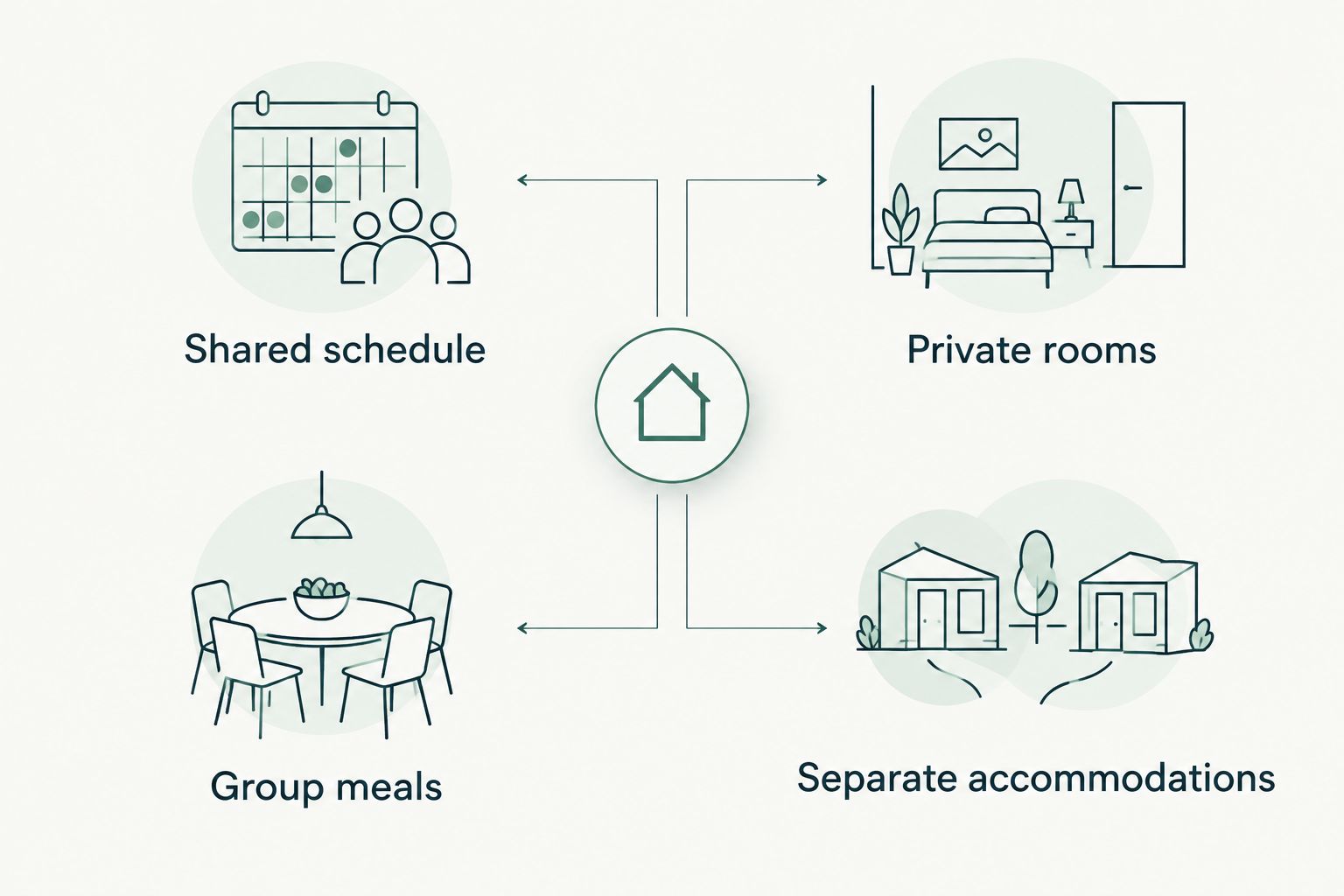
None of these formats wins for every guest list. Ask participants what they expect to do together and what they expect to handle for themselves. Those answers will tell you whether the freedom of a house feels restful or like another task.
Why the value of a wellness retreat house varies
The same property will feel different to a group of close friends than to guests who have not traveled together before. Match the house to the group's routines, not to a retreat label. These factors decide whether the stay earns its place in the plan:
- Sleeping needs. A stated guest capacity does not tell you how beds are split or whether anyone will share a room. Get an assignment that each guest can accept.
- Privacy. Shared time is the reason to rent a house, but guests also need a way to opt out. Ask about bedrooms and quieter areas rather than assuming a large home provides solitude.
- Activity space. A meal, a conversation and a group movement session use space differently. Confirm the area for the activity you intend to host.
- House rules. An overnight guest list is not the same thing as permission to bring in an instructor or hold an event. State your plans to the host plainly.
- Planning responsibility. Decide who communicates the schedule, handles meals and answers guest questions. Shared lodging does not remove that work.
- Location. Consider where guests are arriving from and whether your plans require travel away from the house. A convenient address for one part of the group is not automatically convenient for everyone.
Write these answers down before the group starts voting on properties. It prevents a familiar problem: choosing a home everyone likes in photos, then finding that the beds, rules or schedule do not fit the trip.
Do you need wellness equipment for the stay to count?
No. A retreat can be a quiet gathering with shared meals, time outside and a lighter schedule. If your group specifically wants a sauna, cold plunge, hot tub or space for yoga, those become selection criteria rather than assumptions about any rental.
Check each desired feature on the specific property listing and ask how it can be used by your group. Photos alone do not establish whether equipment is available for your stay, whether an outdoor area suits a class or whether a visiting instructor is permitted. Keep an equipment-dependent activity off the itinerary until the host confirms it.
Do not choose a house for an amenity you have not verified. A simple plan that fits the property is more useful than a packed schedule that depends on unanswered questions.
Is a house better for families or friends?
A house works for either when guests want to spend meaningful time together. The questions change with the guest list. Families need a sleeping plan that respects different ages and routines; friends need agreement on how much of the weekend is shared and how much is optional.
For a family trip, ask who needs a quiet room, who plans to turn in early and whether the group's main activity has space for everyone. For friends, settle whether wellness means scheduled sessions or simply permission to rest. Do not ask the property choice to resolve different expectations that the group has not discussed.
A celebration also changes the brief. If the trip includes visitors who are not sleeping at the house, tell the host before booking. A property that suits an overnight group is not automatically approved for a gathering with additional attendees.
Can you plan a wellness weekend without a facilitator?
Yes. Start with a short list of things the group wants to do together, then leave room for guests to choose their own pace. Someone still needs to share the plan and confirm which activities the property permits.
Make meals the anchors of the day rather than filling every hour. Ask guests which activity they would genuinely join and which they would skip. If the answers vary, keep the activity optional instead of treating attendance as the measure of a successful retreat.
If you invite an instructor or another professional, confirm the house rules first. Ask how the person will access the property, where the session can take place and whether additional visitors are allowed. An idea becomes a workable plan only when the setting and the permission match it.
When should you skip the house rental?
Skip a shared house if guests need more private rooms than the sleeping arrangement provides. The same applies when nobody wants to coordinate meals, activities or questions from the group. Calling the trip a retreat will not make that work disappear.
Choose another format if the main reason to travel is a supplied program. A house is a place to stay and gather; instruction and services require separate arrangements unless the property's stated offering says otherwise. Choose separate accommodations if the group's need for personal space outweighs the benefit of staying under one roof.
These are not failures of a rental. They are signs that the group has a different brief. Getting that clear before booking protects the trip everyone is taking together.
FAQ
Is a wellness retreat house rental worth it for a large group?
Yes, when the group wants shared time and accepts responsibility for planning its activities. Confirm bed assignments, gathering space and house rules rather than relying on guest capacity alone.
Does a wellness retreat house include a planned program?
A house rental does not, by itself, establish that a program is included. Confirm any instructor, service or scheduled activity with the host before making it part of your plans.
Is a private house better than a retreat venue?
A private house is better when your group wants to set its own pace. A staffed venue fits guests who want an organized program without assigning that work to someone in the group.
Can you hold a group yoga session at a vacation home?
Ask the host whether the space and house rules allow the session you have in mind. Guest capacity alone does not confirm that a yard or indoor room suits a group class.
What should you check before booking a wellness house?
Check the sleeping arrangement, gathering space, rules for visitors and activities, and the group's privacy needs. Ask the host about anything your itinerary depends on.
Can families use a wellness retreat house?
Yes, if the beds, routines and shared spaces fit the family. Plan for guests who need quiet time as well as those who want group activities.
How do you keep a group retreat restful?
Leave unscheduled time and make group activities optional when guests want different things. Assign one person to communicate the plan so everyone knows what has been arranged.
One last thing
Before you reserve a house in 2026, send the host the itinerary you actually intend to follow, not just your guest count. That one conversation can settle whether your planned gathering, visitors and activities fit the property. For a group retreat, a clear answer to those questions is more useful than another amenity on a list.
Lynxresort is a fit to consider for wellness-focused groups that want a private South Florida home and direct booking with the host. Compare the specific home's sleeping layout and rules with your plan before choosing it.