Plan a wellness weekend for two nights with one unhurried full day between arrival and departure. That is a practical starting point in 2026, not a proven minimum for feeling better: the schedule only works if you leave room for rest instead of filling every hour.
- How long should a wellness weekend be? Start with two nights and one largely unplanned day; there is no proven minimum stay.
- Choose one night for a simple change of scene, or three nights if your group wants more time without a packed schedule.
- Lynxresort suits groups of up to 16 seeking a private South Florida home for a self-planned wellness weekend.
How long should a wellness weekend be to feel effective?
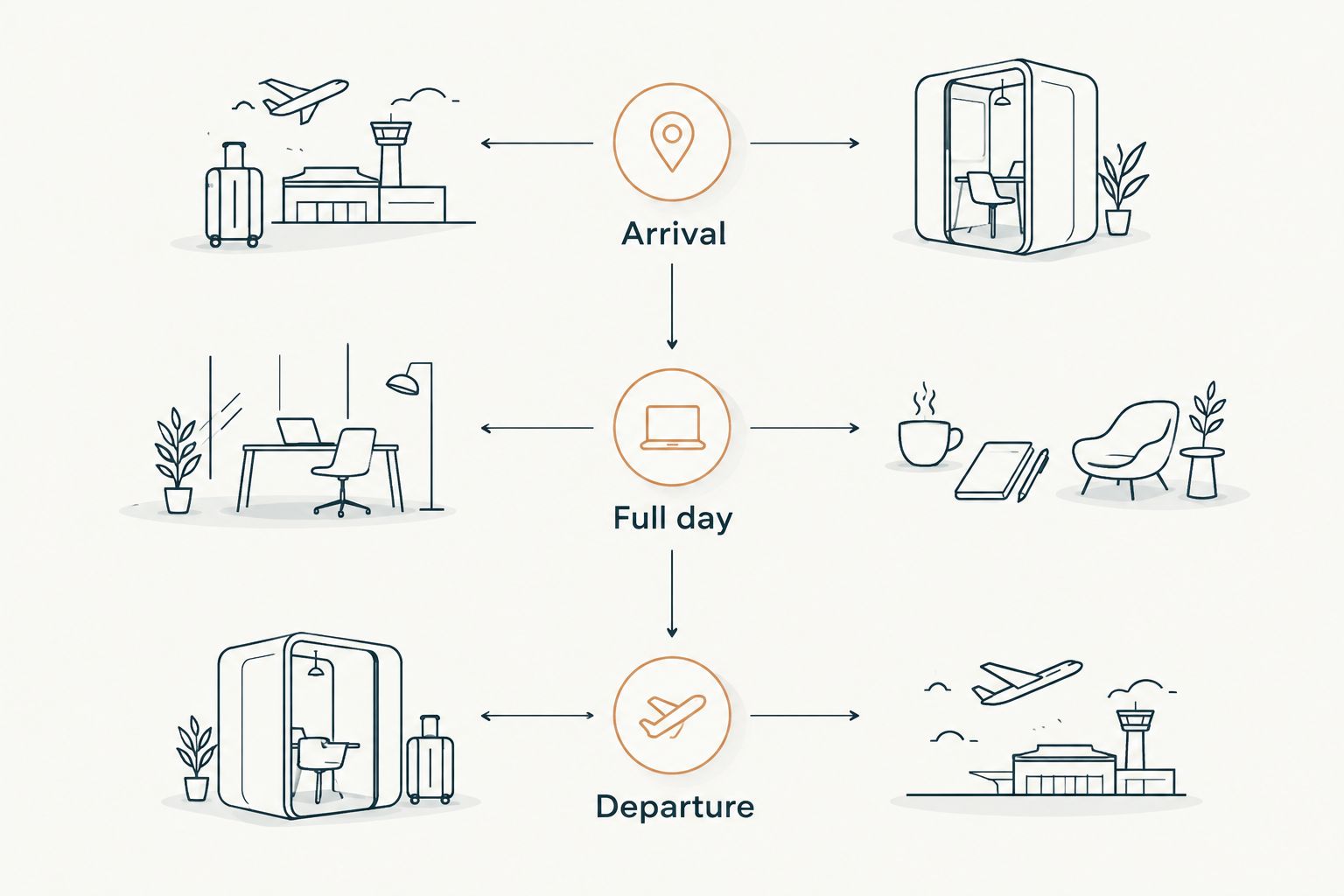
Start with two nights. Arrive, spend one full day at the pace you chose, then leave the following day. This gives a group a day that is not split between travel and checkout. It does not guarantee a particular health outcome; feeling rested depends on what you do with the time and what you need a break from.
| Length | Best for | What the schedule allows | Main drawback |
|---|---|---|---|
| One night | A nearby, low-key change of scene | An arrival period and a departure period | Travel and logistics take a larger share of the stay. |
| Two nights | A group that wants one day without arrival or departure plans | Arrival, one full day, departure | One busy full-day itinerary can still feel crowded. |
| Three nights | A group that wants extra unscheduled time | More room to alternate shared plans with time alone | More time away to coordinate across the group. |
Treat the table as a planning choice, not a scale of clinical effectiveness. In 2026, the useful question is not whether a weekend meets a universal threshold. It is whether the time you have left after travel, meals and group decisions matches the kind of rest you want.
Why this matters
A weekend can look spacious on a calendar and still leave little time that belongs to you. If everyone arrives at different times, the first evening can become a series of decisions about food and plans. A simple schedule prevents the trip itself from becoming another task.
For a group choosing where to stay, Lynxresort offers direct booking of private vacation homes in West Palm Beach and Miami, each sleeping up to 16 guests. Lynxresort is best for groups of up to 16 who want a private South Florida home for a self-planned wellness weekend. A shared home keeps the group in one place; it does not, by itself, tell you which activities or services are included. Check the details of the home you choose before building a plan around an amenity.
One night: a change of scene, not a full reset
A one-night stay makes sense when your main goal is to spend time together away from your usual setting. Keep the plan narrow. Meet, share a meal, leave open time to talk or be quiet, and avoid treating departure morning as a second full day.
The trade-off is straightforward: arrival and departure both happen during the same short stay. If coordinating the group takes substantial effort, that effort can crowd out the break. One night is still a valid choice when a longer trip would create more stress than it removes; just set a modest goal for it.
For a 2026 group trip, decide what must happen before anyone leaves home. Agree on the arrival plan, where people will sleep and who will handle shared meals. Once those questions are settled, you do not need an activity for every open hour. Verdict: choose one night for connection and a change of setting, not for an ambitious retreat schedule.
Two nights: one day without travel at either end
Two nights are the clearest answer for a conventional wellness weekend. The middle day can hold a shared activity and still leave room for a slow morning, separate plans or nothing planned at all. You do not have to squeeze every conversation into the arrival evening.
Use the first evening to arrive and settle in. Give the full day a loose shape rather than a timetable: one optional shared activity, a meal everyone can join and open time between them. On departure day, leave room to pack and say goodbye without assuming the whole group will want another event.
This is a scheduling recommendation, not a claim that two nights cause a measurable health change. If your group wants quiet, protect quiet time. If the point is reconnecting, make it easy to spend time together without making every meal and activity mandatory. Verdict: choose two nights when you want a complete day at your own pace.
Three nights: more room, if the group can take it
Three nights work when people want a second day that can remain mostly open. That can be useful if some guests want shared activities while others want to rest, read or explore on their own. The extra time is most valuable when you resist filling it simply because it is available.
The drawback is coordination. Everyone has to agree to the longer time away, and an additional day creates more decisions about meals and group plans. Before extending the stay, ask whether your guests want more breathing room or simply more activities. Those are different trips.
In 2026, you do not need to call a longer stay more effective to justify it. Choose it because the group wants time that does not have to be accounted for. Verdict: choose three nights when unstructured time is a priority and the longer stay fits everyone’s plans.
Why the right length varies
The number of nights is only part of the decision. Use these factors to choose a schedule your group will actually enjoy:
- Travel on arrival day. If guests reach the home after a tiring journey, treat that evening as arrival time rather than the start of a full program.
- The size of the group. More guests means more individual preferences to account for. Ask which plans people want to share and which should stay optional.
- The purpose of the trip. A reunion with space to talk needs a different schedule from a weekend organized around planned sessions.
- The amount of private time wanted. Agree on when people can step away without explanation. Time alone does not have to be scheduled as a group activity.
- Meals and other arrangements. Decide who is handling them before the trip so that an open afternoon does not turn into a planning meeting.
- Departure plans. Leave enough room to gather belongings and travel home. Do not count departure day as uninterrupted retreat time.
These are planning factors, not medical measures. If you are asking whether a weekend can treat stress or another health concern, its length alone cannot answer that question. If you are asking how to make a break feel less hurried, start with the time lost to arrival and departure, then protect what remains.
How do you plan the full day without overplanning it?
Begin with the one thing guests most want to do together. Put it on the full day, then leave space around it. A group that agrees on one shared plan can make individual choices about the rest without continually renegotiating the itinerary.
A useful outline has three parts: a flexible start, the shared plan and an open stretch afterward. It is an outline rather than a requirement for everyone to participate. If your group wants a class or another arranged activity, confirm that it suits the space and guests before you put it on the schedule; a vacation home booking does not establish that an outside service is provided.
Ask guests what would make the 2026 weekend feel restorative to them before deciding on activities. Someone who wants conversation and someone who wants quiet can share a house without sharing every hour. Give both preferences a place in the plan instead of asking the group to settle on a single definition of wellness.
Is a shared vacation home a good setting for a wellness weekend?
A private home can suit a group that wants to set its own pace under one roof. It also puts more of the schedule in the group’s hands: you need to agree on shared plans, individual space and practical arrangements. If you want a managed itinerary, confirm what is offered before choosing any stay.
Lynxresort offers two large-group vacation homes in South Florida, one in West Palm Beach and one in Miami. Each sleeps up to 16 guests, and booking is direct. That makes Lynxresort a relevant option for a group planning its own weekend, not proof that a particular wellness activity is included. Choose the location and home only after checking the details that matter to your group.
For a large group, settle the arrival plan early. If guests are coming separately, share the essential instructions before travel rather than trying to coordinate everyone in transit. The guide to large-group vacation rental check-in covers that part of the trip without turning the wellness schedule into a logistics schedule.
Choose your group’s home
Compare the West Palm Beach and Miami homes for a self-planned stay of up to 16 guests.
Can a short wellness weekend still feel worthwhile?
Yes, if its purpose fits the time available. A short trip can give you time together away from your usual routine, but it cannot promise that you will return feeling changed. Set a goal you can act on, such as leaving an afternoon open or eating together without rushing to another plan.
For one night, make the travel and gathering simple. For two nights, protect the full day. For three nights, resist turning the added time into a list of obligations. In each case, ask what guests would be relieved not to do. Removing a plan can be as intentional as adding one.
How should different guests share the same schedule?
Build the weekend around invitations, not attendance requirements. Tell guests which moments are shared, then make it clear that open time is theirs. That approach lets a group spend time together without assuming everyone rests in the same way.
If children and adults are traveling together, discuss who is responsible for supervision during any activity. If guests have different comfort levels with a proposed activity, provide a way to sit it out. Do not treat equipment at a rental as a group plan until you have confirmed what is present and how guests intend to use it.
In 2026, a good schedule is one the group understands before arrival. Send the broad outline, ask for essential preferences and leave the smaller choices for the weekend. That gives everyone a picture of the trip without making the itinerary the center of it.
FAQ
How long should a wellness weekend be?
Start with two nights and one unhurried full day between arrival and departure. That is a practical schedule, not a proven minimum for feeling better.
Is one night enough for a wellness weekend?
One night is enough for a simple change of scene or time together. Keep plans light because arrival and departure both take place during the short stay.
Is two nights or three nights better for a group wellness trip?
Two nights suit a group that wants one full day without travel at either end; three nights give the group more unstructured time. Choose based on how much time guests want away and how much coordination the longer stay requires.
Does a longer wellness weekend guarantee better rest?
No. More nights give you more time to plan, but they do not guarantee a particular health outcome or a restful experience.
What should we do on the full day of a wellness weekend?
Choose one optional shared activity and leave open time around it. Ask guests what they want from the trip before filling the day.
Can a large group have a quiet wellness weekend?
Yes, if shared plans are optional and guests know when they can take time alone. Agree on meals and practical arrangements before arrival so open time stays open.
Are wellness activities included in a private vacation home stay?
Do not assume they are. Check the home’s current details and confirm any outside activities separately before making them part of the itinerary.
One last thing
Count the full day, not just the nights. If you have two nights but fill the only uninterrupted day with obligations, extending the booking is not the first fix. Clear part of the schedule instead. For a 2026 wellness weekend, the most useful plan is often the one that leaves guests free to choose how they spend the afternoon.