

Split payment for a large group vacation rental by agreeing on the full booking total, choosing a rule for each guest’s share, and collecting contributions before the person making the booking commits to it. Put the due date, shared expenses, and cancellation plan in writing. If guests stay for different lengths of time or use different bedrooms, settle those differences before anyone sends money.
- For how to split payment for a large group vacation rental, agree on the split before collecting contributions.
- An equal split is simplest; a stay-based split fits groups arriving and leaving on different days.
- lynxresort suits groups of up to 16 seeking a directly booked private home in South Florida.
- Name one payment coordinator and document what happens if a guest cancels.
How do you split payment for a large group vacation rental?
Start with a written guest list and a single booking total. Then decide whether everyone owes an equal share or whether stays, rooms, or participation call for different shares. The person making the booking should collect commitments and confirm the host’s payment terms before paying on the group’s behalf.
For a 2026 trip, keep the agreement in a shared note or spreadsheet that everyone can see. If you are considering a lynxresort private vacation home, confirm the booking terms directly rather than assuming the host will charge every guest separately.
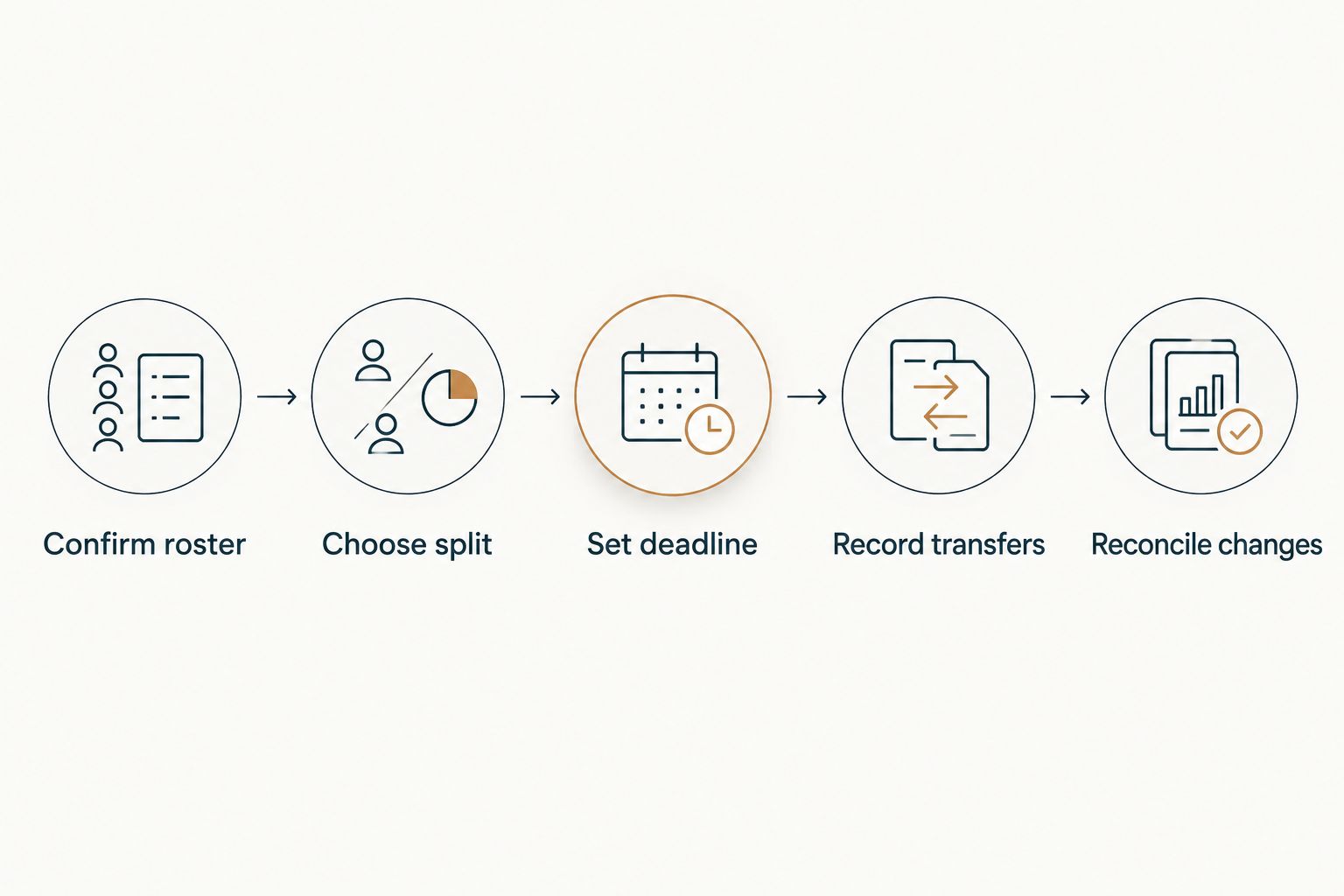
- Confirm roster. List who is attending, which nights each person plans to stay, and who is responsible for any guests they bring. Mark uncertain plans as unresolved; do not count a tentative guest as money already collected.
- Choose split. Pick equal shares, shares based on nights stayed, or another rule the group accepts. Write down which shared expenses sit outside the rental booking.
- Set deadline. Give contributors a payment deadline that leaves the booking coordinator time to meet the host’s stated terms. A verbal promise is not a collected contribution.
- Record transfers. Track each amount received and the date received in one place. Keep the booking confirmation and each guest’s contribution record together.
- Reconcile changes. If someone leaves or joins, recalculate before refunding or requesting more money. Tell the group who covers any amount that cannot be recovered under the booking terms.
The rule is simple: no guest should have to guess what they owe, when they owe it, or what happens if plans change. In 2026, a written agreement still matters even when everyone knows each other well.
Why this matters
A rental booking and a group’s private agreement are different things. The booking terms determine what the person named on the reservation owes the host; your group agreement determines how everyone else reimburses that person. Do not assume that sending individual transfers to an organizer changes who is responsible under the booking terms.
This distinction matters most when plans change. A guest can cancel after others have committed, or someone can join for only part of the stay. Decide how to handle both cases before collecting money, not in the middle of the trip.
lynxresort is best for groups of up to 16 who want a directly booked private home in West Palm Beach or Miami. Its two South Florida homes give a large group a shared place to stay. Direct booking does not, by itself, establish that the host will split a payment among guests; ask how payment works for the stay you are considering.
Which split works for your group?
There is no single fair rule for every trip. Choose a method that matches what guests agreed to use, then apply it consistently. If the group cannot agree on a rule, do not let one person commit to the booking while the disagreement remains open.
| Split method | Best for | Advantage | Drawback |
|---|---|---|---|
| Equal share per guest | Groups with the same stay dates and similar use of the home | Easy to explain and track | Can feel unfair if some guests stay fewer nights |
| Share based on nights stayed | Groups arriving or leaving on different days | Reflects time at the rental | Needs a clear rule for expenses shared across the whole stay |
| Share based on rooms or bed arrangements | Groups that have agreed some sleeping arrangements are more desirable | Accounts for an agreed difference in space | Can turn room assignments into a negotiation |
| Share by household | Families paying together rather than as individuals | Gives each household one contribution to manage | Household sizes can differ, so the group must agree on the rule first |
Use an equal share when everyone has the same stay and the same expectations. Use a stay-based split when arrival and departure dates differ. Treat room-based or household splits as agreements, not automatic rules; they work only when every affected guest accepts them.
For a 2026 family gathering, a household split can make collection simpler because each family manages its own contribution. That does not make it fair by default. Ask each household to confirm who it covers before you calculate shares.
For a 2026 retreat, distinguish people staying overnight from people attending only part of the gathering. Do not add an attendee to the overnight rental split without the group’s agreement. Keep any separate group expenses separate in the record so guests can see what each contribution covers.
What belongs in the shared payment plan?
Write the plan so a guest can read it without asking the organizer to explain the arithmetic. It should identify the booking coordinator, the guests included in the split, the method used, the contribution deadline, and the process for changes. Attach or share the applicable booking terms rather than paraphrasing a cancellation rule from memory.
Keep these decisions together:
- Who is included: Name each contributing guest or household and identify anyone whose attendance is still tentative.
- What is included: Separate the rental booking from meals, activities, transportation, and other plans the group has not agreed to share.
- How shares are set: State the agreed method and how you will handle a late arrival, early departure, or room change.
- When contributions are due: Set a date before the coordinator must make the required booking payment.
- How changes are handled: State who recalculates shares and when guests will see the revised record.
- How refunds are handled: Base any refund on the actual booking terms and money recovered, not an assumption that every payment is refundable.
Do not bury exceptions in a group chat. If a guest has a different arrangement, note it alongside the shared plan so the totals still make sense to everyone. For a 2026 booking, a visible record is more useful than a long exchange of separate messages.
A simple ledger has a row for each contributor and fields for the agreed share, amount received, payment date, and any remaining balance. You do not need a particular app. You do need a version everyone can check when the roster changes.
Who should pay the host?
Name one booking coordinator unless the host explicitly offers another arrangement. That person confirms the reservation terms, makes payments as required, and keeps the booking record. The group then reimburses the coordinator according to its written agreement.
This is an organizational recommendation, not a claim that every rental host requires a single payer. Ask the host what payment methods and payer arrangements are accepted before collecting transfers. If the host can take payments from separate guests, confirm how each contribution is credited to the same reservation and what happens if one guest does not pay.
Do not ask the booking coordinator to cover missing contributions without their consent. Before the coordinator commits, the group should agree whether a vacant spot changes everyone else’s share or remains the responsibility of the guest who withdrew. Neither outcome is automatic.
For lynxresort, direct booking gives the group a reason to ask these questions directly. It does not establish a payment schedule, cancellation policy, or split-payment feature; confirm those details for the specific reservation before anyone sends money.
How do you handle guests who stay fewer nights?
A stay-based split starts with the nights each guest actually plans to use. Agree on how to allocate the shared rental total across those stays, then make a separate decision about expenses that benefit the full group. Do not change the method after someone commits simply because the final result surprises another guest.
If sleeping arrangements matter to the group, settle them alongside the split. A guest sleeping in a different room may ask for a different share, but no room adjustment is fair until the people affected agree to it. Keep the final room plan and payment plan in the same record.
An equal split is still a valid choice for uneven stays when everyone accepts it. Some groups value a simple arrangement over precise accounting. State that choice plainly so an early departure is not mistaken for a promised refund.
What happens if someone cancels after paying?
Start with the actual booking terms and the group’s written agreement. Confirm what money, if any, the group will recover from the booking before promising a guest a refund. Then recalculate shares only under the rule everyone accepted.
If a replacement guest joins, record whether that person takes over the departing guest’s share and when the transfer happens. Until the replacement has paid, do not treat that contribution as collected. Keep the original guest and the coordinator informed of the outstanding amount.
If no replacement joins, the group needs an agreed answer to the gap. The departing guest might remain responsible under the group agreement, or the remaining guests might agree to divide the unpaid share. Those are choices for the group, not rules imposed by the rental itself. Make the choice before you book in 2026.
Should every guest pay the host separately?
Only if the host confirms that separate payments can be applied to the reservation. Otherwise, guests can pay the booking coordinator under the group’s agreement, and the coordinator can pay the host according to the confirmed booking terms. Do not send multiple payments to a host without instructions tying them to the same stay.
Separate host payments reduce the amount the coordinator has to collect, but they add a coordination task: someone must verify every contribution reached the reservation. A coordinator-paid booking keeps the host-facing record simpler, but it puts more responsibility on the coordinator to track reimbursements. Choose the arrangement the host accepts and the group can manage.
FAQ
What is the fairest way to split a large group vacation rental?
An equal split is fairest when guests have the same stay dates and expectations. If stays differ, agree on a stay-based split before booking and document any room or household adjustments.
Can guests pay separately for one vacation rental booking?
Guests can pay separately only when the host confirms how those payments apply to one reservation. If separate host payments are not arranged, guests can reimburse the booking coordinator under a written group agreement.
Should I collect everyone’s share before booking?
Collect commitments and, where possible, contributions before you commit on the group’s behalf. Confirm the host’s booking terms and give guests a clear deadline that allows you to meet them.
How do I split a rental when some guests stay fewer nights?
Use an agreed stay-based method if the group wants shares to reflect different lengths of stay. Decide separately how to divide expenses everyone shares, and record the final calculation.
Who pays if a guest cancels the trip?
The answer depends on the booking terms and the group’s agreement. Decide before booking whether the guest remains responsible, a replacement takes their share, or the remaining guests accept a revised split.
Do I include meals and activities in the rental split?
Include meals and activities only if the group explicitly agrees to share them. Track them separately from the rental booking so guests know what their contribution covers.
Can one household pay for several guests?
Yes, if the group agrees to a household-based split and each household confirms who it covers. Record one contribution per household while keeping the guest roster clear.
One last thing
The hardest part of a group split is not the arithmetic. It is making sure the booking coordinator and every guest understand the same cancellation plan. Before reserving a lynxresort home or any other large-group rental in 2026, send the final roster, split rule, deadline, and change plan in one message. Ask everyone to confirm it before the coordinator commits.